Best Shopify Apps for Post-Purchase: Upsell to Returns
Comparisons & Alternatives Published: October 19, 2026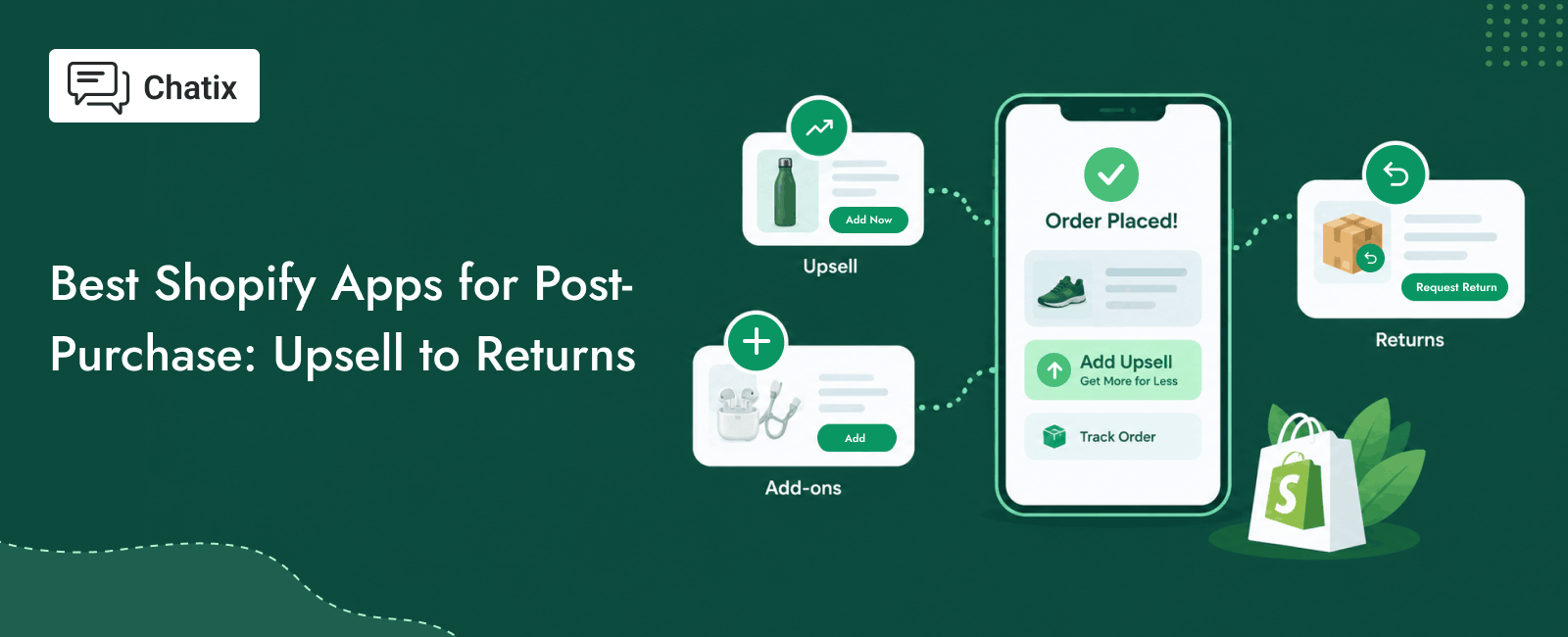
Post-purchase apps for Shopify almost always means one narrow thing: a one-click upsell offer on the thank-you page. That's real, but it's only one piece of what happens after a customer pays.
Everything that happens after checkout but before the sale is fully settled falls in this same window, and most roundups only cover the upsell slice. This list covers the rest too, since that's what actually running a store after checkout looks like.
Every app below is checked against its real Shopify App Store listing, not marketing copy. Review counts and ratings are current as of this post's last update, and they shift over time.
Pick the category that matches what you're actually trying to fix first. Most stores end up running two or three of these at once, not just one.
Quick Answer
For post-purchase upsells specifically, AfterSell and ReConvert are the safest picks by review volume, with Kaching standing out for a sustained 5.0 rating. No single app in this list handles every post-purchase job well, so match the pick to your actual bottleneck instead of looking for one tool to do it all.
Key Takeaways
- ReConvert has the largest review base of any post-purchase upsell app checked here, at 2,798+ reviews.
- Kaching Post Purchase Upsell held a 5.0 rating across three separate review-count snapshots over more than a year, a rare sustained result.
- AfterSell is now owned by Rokt, a detail most comparison posts don't mention.
- Shopify allows only one post-purchase page per checkout, so apps chain at most an upsell and a downsell there, never an open-ended funnel.
- On Shopify specifically, Chatix's WhatsApp order updates beat plain order-confirmation emails on open rates, since WhatsApp messages get seen in minutes, not hours.
- Return app review counts vary meaningfully by source and snapshot date, so treat any single reviewer's exact number as an estimate, not a fixed fact.
What Are the Types of Post-Purchase Apps?
Five distinct jobs get lumped under "post-purchase apps," and knowing which one you actually need narrows the list fast.
- Upsell apps: show a one-click offer right after checkout, before or on the thank-you page, charged to the card already on file.
- Order editing apps: let the customer change their own order after it's placed, no support ticket required.
- Order tracking apps: give customers a branded page to check shipment status themselves, instead of emailing to ask.
- Order updates and support apps: proactively message the customer through WhatsApp or SMS, rather than waiting for them to go check a page.
- Returns and exchange apps: handle the request, label, and refund or exchange workflow once a delivered order comes back.
For a direct comparison of WhatsApp and SMS on cost, delivery rates, and compliance for Shopify order updates - the WhatsApp vs SMS for Shopify guide covers which channel fits which store.
Comparison Table
The table below summarizes every app in this list by category, rating, and review count, so you can jump straight to whichever row matches your actual need.
| App | Category | Rating (reviews) | Best For |
|---|---|---|---|
| AfterSell | Upsell | 4.8 (900+) | Most complete post-purchase upsell builder |
| ReConvert | Upsell | 4.8 (2,798+) | Biggest review base, lowest-risk pick |
| Kaching | Upsell | 5.0 (270+) | Sustained perfect rating over a year-plus |
| Zipify OCU | Upsell | 4.7 (1,000+) | Every offer placement in one app |
| LEO Order Editor | Order Editing | 5.0 (7) | Letting customers fix their own orders |
| Parcel Panel | Order Tracking | 4.9 (3,180+) | Branded tracking pages, cutting WISMO tickets |
| Chatix | Updates & Support | 4.9 (257+) | WhatsApp order updates and support automation |
| Whatomation | Updates & Support | 4.7 (219) | Simple WhatsApp order status alerts |
| AfterShip Returns | Returns | 4.7 (1,200+) | Widest carrier network for return labels |
| Return Prime | Returns | 4.8 (700+) | Best value, free plan to start |
Best Shopify Upsell Apps for Post-Purchase Offers
A post-purchase upsell shows a one-click offer after the customer pays, charged to the card already on file, rendered through Shopify's own post-purchase checkout extension. That's why these offers load fast and convert well: Shopify builds and serves the page itself, and only one such page exists per checkout.
Check the billing model before picking one, not just the listed starting price. AfterSell, ReConvert, and Zipify OCU all add a revenue-share fee on top of their base plan, so the real monthly cost scales with how much the app actually sells, not just your order count.
1. AfterSell
AfterSell is the most complete dedicated post-purchase upsell builder in the Shopify App Store, now owned by Rokt after an acquisition most comparison posts skip over. The Rokt backing means deeper ad-tech and personalization resources behind the product than most standalone upsell apps have access to.
- 4.8 rating, 900+ reviews
- Supports post-purchase, pre-purchase, and in-cart offers in one app
- Built-in A/B testing on offer design
- Free plan available, paid tiers scale with order volume
- Not the cheapest fit for a store that only wants one simple thank-you-page offer; smaller apps cost less for that alone
2. ReConvert
ReConvert has the largest review base of any app in this category by a wide margin, which makes it the lowest-risk pick for a store that's never run a post-purchase app before. That scale also means more documented edge cases and support precedent than any newer competitor can offer.
- 4.8 rating, 2,798+ reviews
- Visual, drag-and-drop thank-you page builder
- Strong free-tier entry point before scaling to paid
- Pre-built templates for common offer types, not a blank canvas
- Not the deepest option for native checkout-extension offers inside Shopify Plus checkout itself, rather than the thank-you page
3. Kaching Post Purchase Upsell
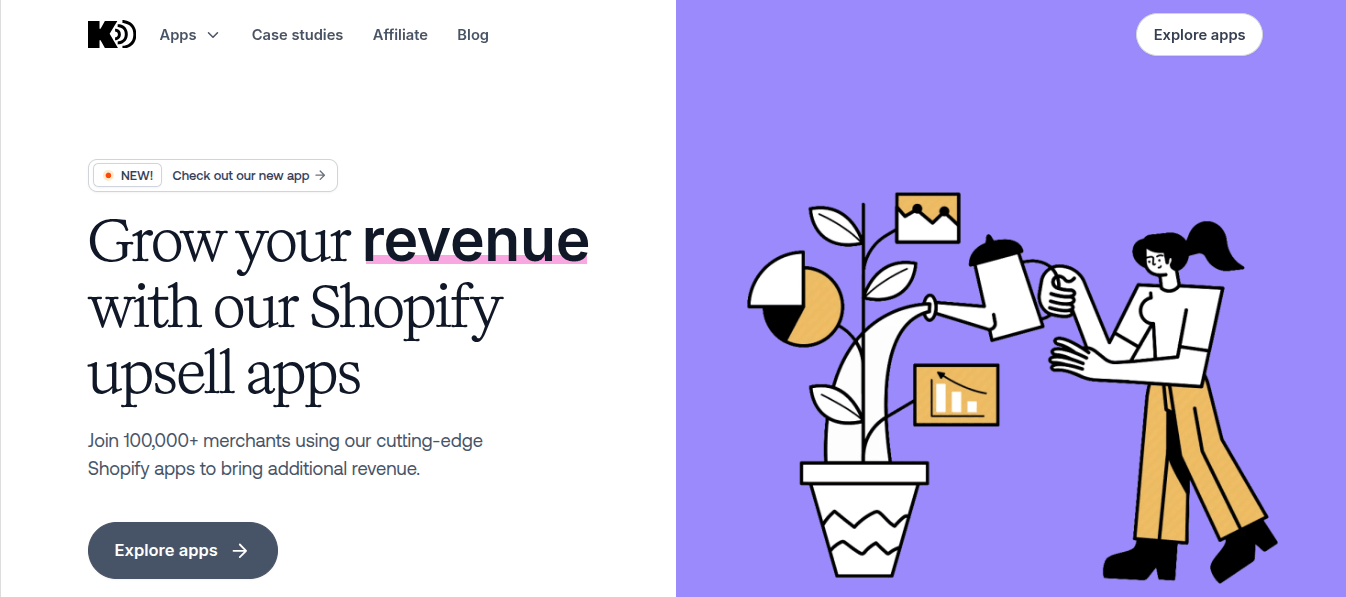
Kaching's standout isn't size, it's consistency. The rating held at a perfect 5.0 across review counts of 143, 204, and 273 checked at different points over more than a year, with the same support team names showing up across dozens of independent reviews, a real signal of a stable team rather than a lucky early streak.
- 5.0 rating, 270+ reviews
- Bundling and upsell offers in one toolset
- Consistently praised support response time in reviews
- Newer app, smaller feature set than AfterSell or Zipify OCU
- Not proven yet at AfterSell or ReConvert's scale, so a high-volume store may want more review history before committing fully
4. Zipify OCU (One Click Upsell)
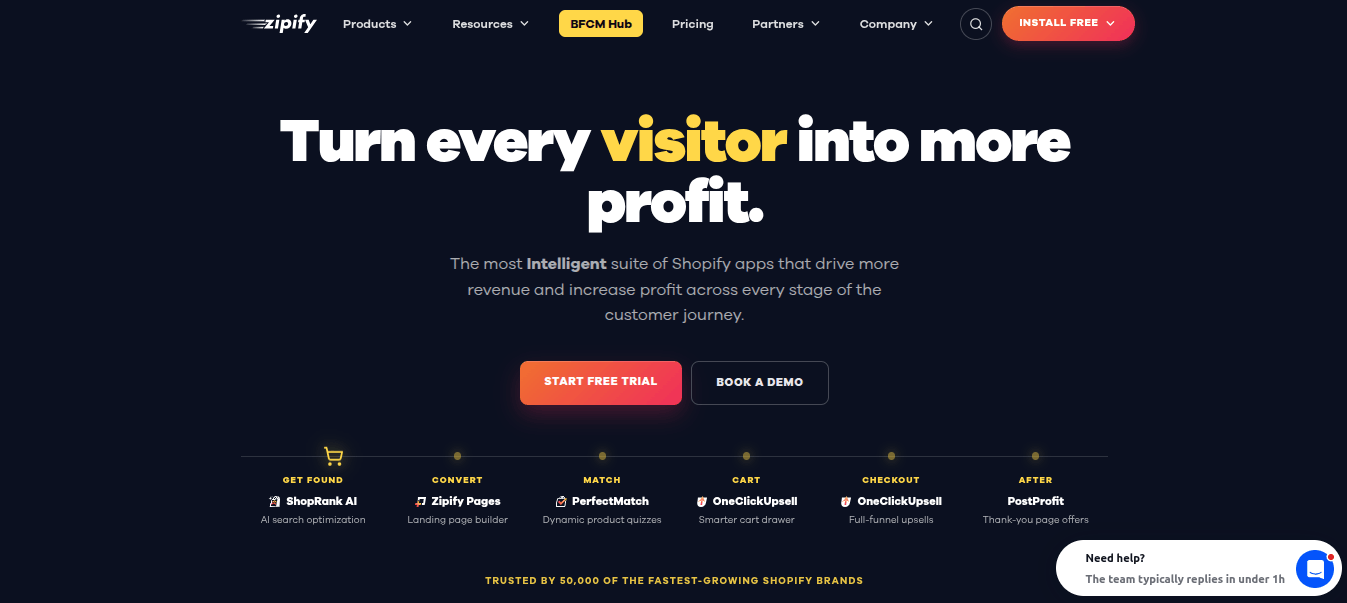
Zipify's pitch is coverage: one app handling post-purchase, pre-purchase, cart drawer, product page, and checkout offers for Shopify Plus stores, with AI-picked offers and split testing built into the core workflow rather than added later. The trade-off is setup complexity, since more placements means more to configure before launch.
- 4.7 rating, 1,000+ reviews
- Every major offer placement in a single app
- AI-based offer selection with built-in split testing
- Built by Zipify, an established Shopify Plus-focused app maker
- Not a fit for a very small catalog or single-product store, where the setup overhead outweighs the benefit
Best Shopify Apps for Post-Purchase Order Editing
Letting a customer fix their own order, wrong size, wrong address, an extra item, cuts a real category of support tickets before they're ever opened. Almost nothing in the upsell category above touches this.
1. LEO Order Editor & Upsell
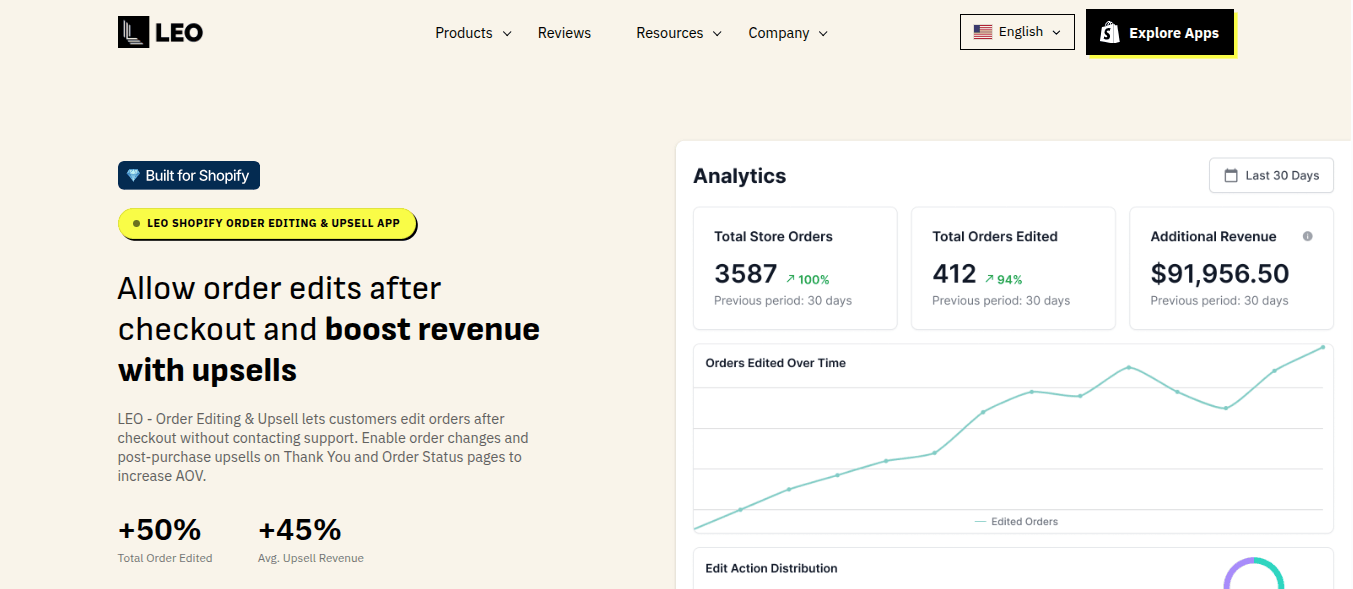
LEO is a small app by review count, but it does something none of the upsell apps above do: it lets customers edit their own order after checkout, not just accept an offer. One of its own reviews states it plainly, the app reduced support tickets while also lifting average order value (AOV) through its thank-you-page upsells. It's part of a wider LEO suite of Shopify apps, but this specific product is the one that fits this category.
- 5.0 rating, 7 reviews (small sample, worth noting honestly)
- Self-service post-checkout order edits
- Thank-you page upsells bundled with the editing feature
- Smart rules limit what customers can change, so edits stay within fulfillment constraints
- Not a fit if you need a large, battle-tested review history before trusting a new app with live orders
Best Shopify Apps for Post-Purchase Order Tracking
A branded tracking page exists for one reason: cutting down on the single most common post-purchase support ticket, where is my order. A dedicated tracking app covers this far better than a generic order-status email ever does.
1. Parcel Panel
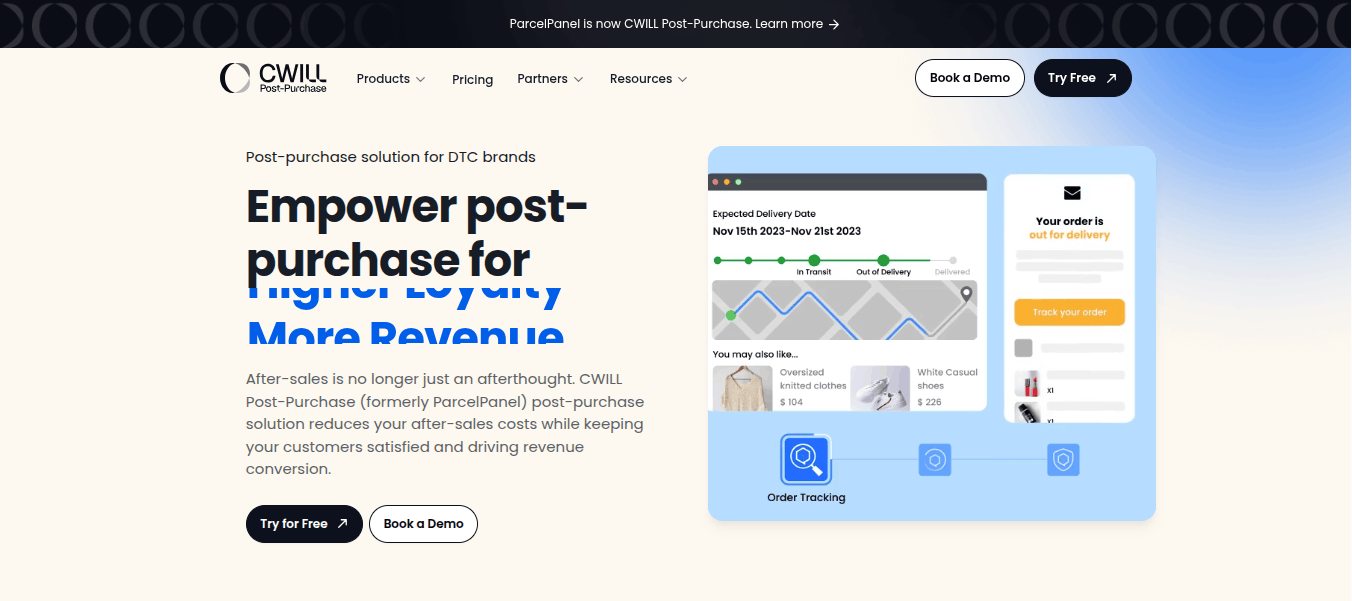
Parcel Panel has the largest review base of any order-tracking app checked for this list, with a consistently high rating to match. At that scale, it's been tested against enough carrier combinations that edge cases in tracking data tend to get caught and fixed quickly.
- 4.9 rating, 3,180+ reviews
- Branded, customizable tracking page
- Syncs with a wide range of global carriers
- Upsell placements available directly on the tracking page itself
- Not much value on its own for a store that ships with one carrier in one country, where the carrier-sync depth goes unused
Best Shopify Apps for Post-Purchase Order Updates and Support
This is a different mechanism from a tracking page. Instead of a customer checking a link themselves, the store proactively messages them when something changes, which is where WhatsApp and SMS apps compete, not tracking-page apps.
1. Chatix
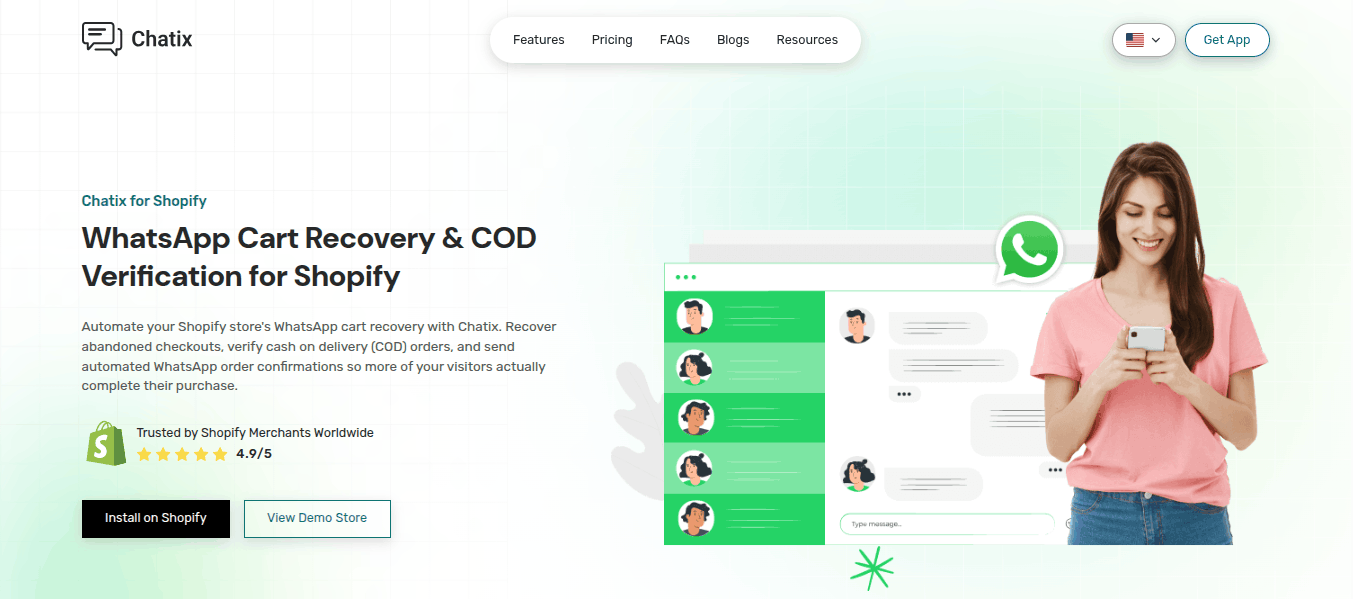
Chatix sends automated WhatsApp order updates, cash-on-delivery (COD) confirmations, and support messages directly from Shopify, with a shared inbox for the support side. Independently confirmed at 4.9 with 257+ reviews, which beats both other apps in this specific category on rating and review count.
WhatsApp order updates reduce support tickets further when timed to arrive inside a free messaging window, which is covered in more depth in a dedicated post on that specific mechanic. COD confirmation in particular matters most for stores running cash-on-delivery at real volume, since a confirmed order ships with far less risk of a refused delivery.
For a look at how Chatix stacks up against other WhatsApp automation tools specifically, see the Chatix vs AiSensy comparison.
- 4.9 rating, 257+ reviews
- WhatsApp order confirmations, shipping updates, and COD verification
- Shared team inbox for support conversations
- Not a fit for a store with no COD orders and no interest in WhatsApp specifically, since SMS- or email-only stores won't use its core strength
2. Whatomation
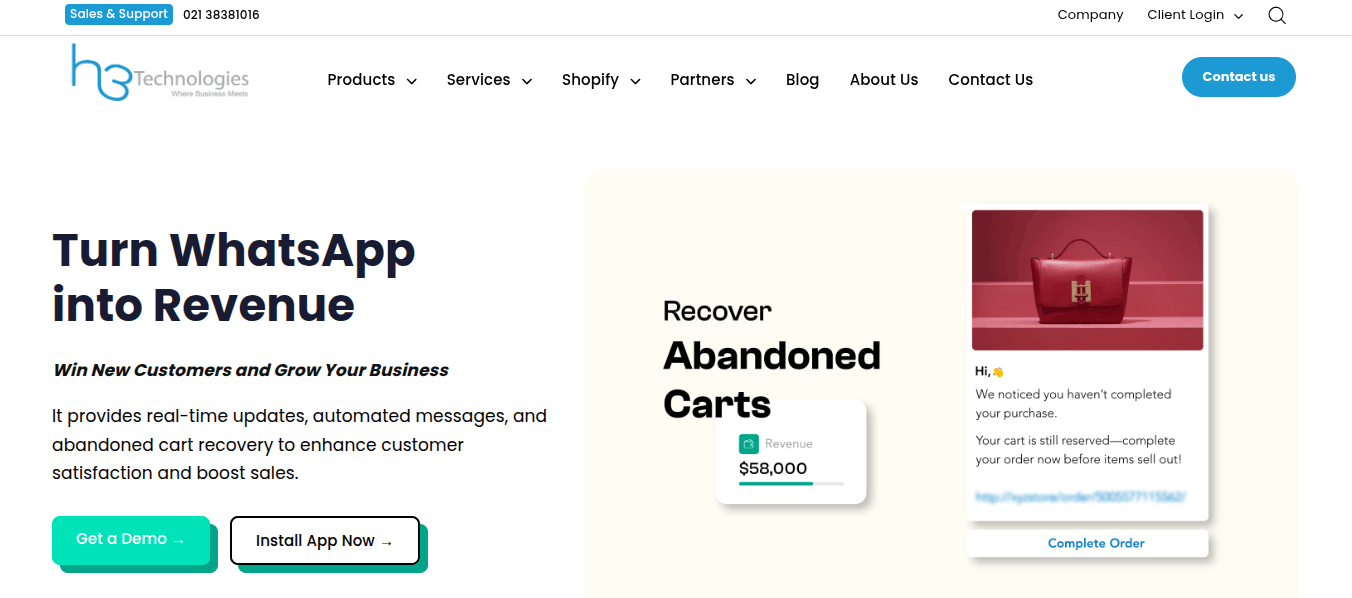
Whatomation covers the same core job, automated WhatsApp order status alerts, with a Built for Shopify badge and generally strong reviews. One review flagged a WhatsApp Business number ban with the app, worth knowing as a real risk rather than leaving it out, since a banned number means every automated message stops at once.
- 4.7 rating, 219 reviews
- Order-status WhatsApp alerts with customizable triggers
- Built for Shopify badge
- Narrower scope than Chatix, focused on notifications rather than two-way support
- Not a fit for a store that wants two-way support conversations, not just one-way order alerts
Best Shopify Apps for Returns and Exchanges
A returns app isn't optional at any real scale. The honest complication here is that review counts for this category vary meaningfully depending on which source and which date you check, so treat any single number below as a snapshot, not a permanent fact.
1. AfterShip Returns
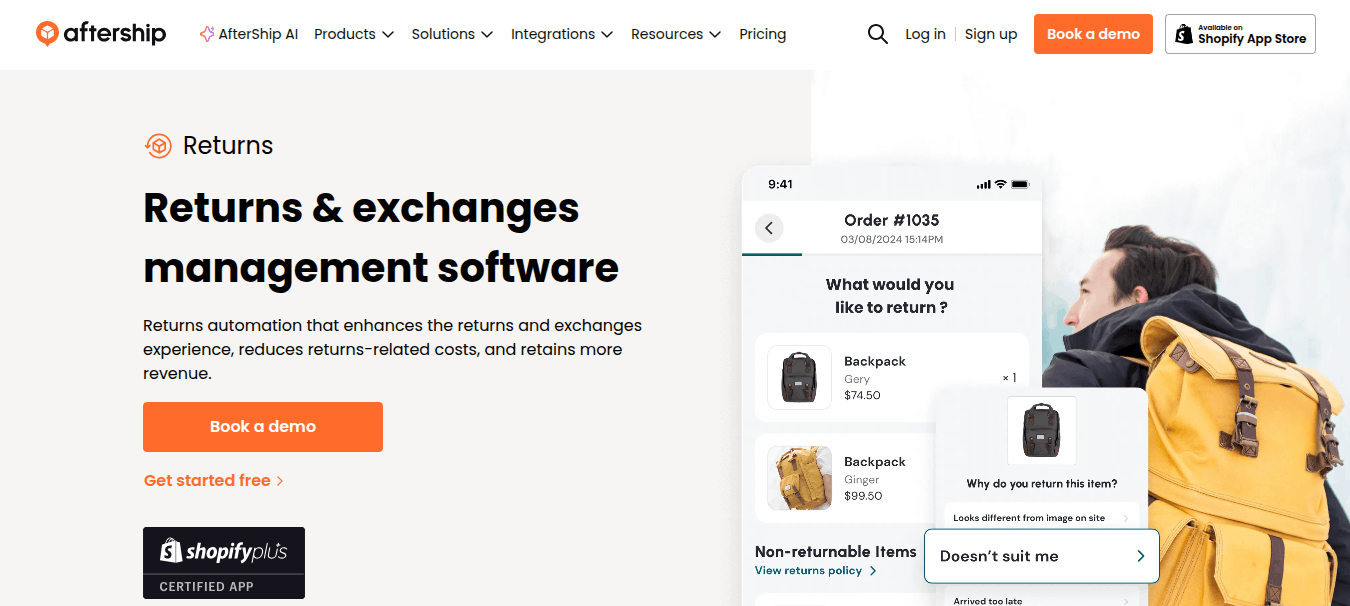
AfterShip Returns consistently comes up as the most-reviewed app in this category across independent sources, though the exact count varies by source and date, anywhere from roughly 1,200 to over 2,400 depending on when it was checked. The underlying shipment-tracking data it already holds from AfterShip's tracking product makes return label generation faster to set up.
- Approximately 4.7 rating, 1,200+ reviews (count varies by source)
- Wide carrier network for return labels
- Builds on AfterShip's existing shipment-tracking infrastructure
- Customizable return policy rules by product or collection
- Not the simplest option for a small store that just wants basic returns without the wider carrier network
2. Return Prime
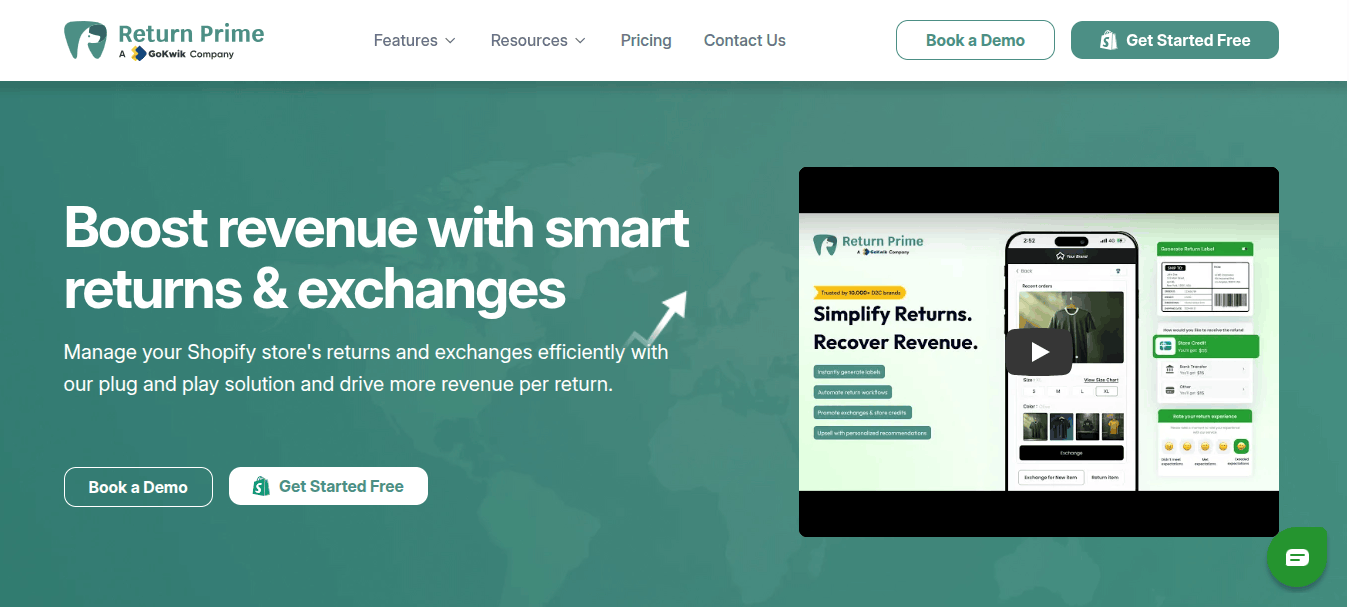
Return Prime shows up consistently as the best-value pick across independent roundups, with a free plan to start and a track record that holds up across sources. It's a reasonable first returns app for a store that hasn't needed one yet but is starting to feel the manual workload.
- 4.8 rating, 700+ reviews
- Free plan available before scaling to paid tiers
- Turns returns into store credit or exchanges, not just refunds
- Simpler setup than AfterShip Returns, with fewer carrier integrations
- Not the deepest option for a high-volume store needing advanced carrier-label automation beyond the basics
Mistakes to Avoid When Picking a Post-Purchase App
A few patterns show up often enough across these categories to call out directly, each one a real cost, not a theoretical risk.
- Running two upsell apps at once. Overlapping post-purchase offers from two different apps can conflict on the same checkout extension slot, and only one will actually render.
- Judging an app by total review count alone. A smaller app with a sustained high rating, like Kaching, can be a safer bet than a larger app with a mixed recent trend, so check the rating trend over time, not just the headline number.
- Skipping the free plan tier. Most apps on this list offer a free or trial tier specifically so a store can test fit before committing, and skipping straight to a paid plan wastes that option.
- Treating order tracking and proactive WhatsApp updates as interchangeable. One is a page the customer checks themselves, the other reaches them directly, and relying on only one leaves a real gap.
How to Choose the Right Post-Purchase App for Your Store
Start with whichever category is actually costing you money or tickets right now, not the one with the flashiest demo.
- High AOV goals, low support volume: start with an upsell app (ReConvert for lowest risk, Kaching for a newer but highly consistent option).
- High support ticket volume around orders: order tracking and WhatsApp updates solve different halves of the same problem, and most stores need both eventually, not either.
- High return rate: a dedicated returns app pays for itself quickly once volume is real, since manual return handling doesn't scale.
- Running cash-on-delivery at meaningful volume: a WhatsApp confirmation step before dispatch cuts refused-delivery costs directly, which plain tracking or upsell apps don't touch.
For how that confirmation flow works on Shopify - message format, timing, and what happens when a customer doesn’t reply - the WhatsApp COD verification guide covers the complete setup.
Running two or three of these together is normal. They don't compete with each other, since each owns a different moment in the post-purchase window. If marketing automation beyond post-purchase is the next thing on your list, WhatsApp Marketing Campaigns for Ecommerce covers that broader territory separately.
Final Thoughts
No single app covers all five of these categories well, and that's fine. Pick the one or two that match your actual bottleneck, whether that's average order value, support ticket volume, or return handling, and add the rest as your store grows into needing them.
If WhatsApp order updates and support automation is the gap, Chatix handles that piece directly from your Shopify store.
Frequently Asked Questions
What is a Post-purchase Upsell App?
It's an app that shows a one-click offer right after a customer pays, using the payment method already on file, rendered through Shopify's own post-purchase checkout extension. The customer accepts or declines in one tap, with no new payment step and no page reload.
Is ReConvert or AfterSell better for Shopify?
Both are strong, well-reviewed choices, so it comes down to fit. ReConvert has the larger review base, which makes it the safer first app for a store testing this category for the first time, while AfterSell offers broader offer placement across the full funnel, not just the thank-you page.
Do I need a Separate App for Order Tracking and Returns?
Usually yes. Tracking apps focus on showing shipment status after an order ships, while returns apps handle the request, label generation, and refund or exchange workflow once a customer wants to send something back. A few apps touch both lightly, but a dedicated app in each does the job more thoroughly.
Can WhatsApp Notifications replace Email for Order Updates?
For many stores, yes, largely. WhatsApp messages tend to get opened within minutes rather than sitting unread for hours in an inbox, which is why order-update apps built on WhatsApp are growing fast across Shopify stores, though email still works as a reliable fallback channel for customers who opt out.
What's the best free post-purchase app for Shopify?
Return Prime offers a genuine free plan to start, and ReConvert has a usable free tier for smaller stores as well, covering the two most commonly needed categories. Most upsell and tracking apps shift to paid plans once order volume grows past a small monthly threshold.
Can I run an upsell app and a returns app together?
Yes, and most growing stores end up doing exactly that without any conflict. They operate at completely different points in the order lifecycle, the upsell at checkout and the return weeks later, so there's no functional overlap between the two, and no reason to pick just one.