


Best Shopify Apps to Launch and Sell New Products in 2026 — Phase by Phase
Best Shopify Apps Published: June 09, 2025
Most new Shopify products don't fail because of the product. They fail because the app stack treating a new product the same as an established one. On a Shopify store with 3 years of purchase history, a loyalty app makes sense — there are customers to reward. An upsell app with 500 reviews behind it converts browsers. A post-purchase email with social proof closes hesitant buyers. None of that applies on launch day, when the product has zero reviews, zero purchase history, and zero repeat buyers to retarget.
The mistake most Shopify merchants make is installing generic 'increase sales' apps and expecting them to move a new product. They don't — not because the apps are bad, but because the sequence is wrong. This guide covers 7 apps mapped to three launch phases, so you know what to install before the product goes live, on launch day, and in the 30 days after. If you want a broader view of how to increase sales on Shopify beyond launch-specific tools, that guide covers the full growth picture.
Quick Answer
The best Shopify apps for a new product launch aren't the same as the best apps for an established store. You need WhatsApp announcements and optimised product pages before launch, social proof and upsell tools on launch day, and email automation plus subscriptions after. The sequence matters more than the apps themselves — the right tool at the wrong phase of a launch doesn't convert.
Key Takeaways
- A new product needs a pre-launch awareness phase before conversion tools will work — installing upsell apps before having reviews wastes the feature entirely
- WhatsApp broadcasts to opted-in customers produce the highest open rates for product announcements — significantly higher than email for a cold launch audience
- Social proof (Loox) and upsell tools (Wizio) only perform on launch day if customers are arriving with intent — pre-launch awareness comes first
- Post-purchase retention tools (Rekitr subscriptions) convert best in the first 7-14 days after the first purchase while the product experience is still fresh
- For Indian Shopify stores, delivery reliability directly affects repeat purchase rate — RTO on a new product launch can undermine the entire first wave of buyers
- All 7 apps in this guide work as a connected stack — not seven separate tools running independently
Why New Shopify Products Underperform in the First 30 Days
Three specific reasons cause most new Shopify product launches to underperform — none of them are about the product quality itself.
The first is wrong app sequencing. Merchants install upsell apps that rely on cross-sell purchase data that doesn't exist for a new product. Recommendation engines that suggest 'frequently bought together' have nothing to reference. Loyalty programs that reward repeat purchases have no repeat buyers yet. These tools aren't wrong — they're just installed before the product has the data they need to work.
The second is no pre-launch audience. Most merchants go live with a new product and then start telling people about it. The sequence should be inverted — building a warm audience through WhatsApp opt-ins and email subscribers before launch day means the first buyers arrive with intent, not as cold traffic seeing the product for the first time.
The third is treating post-launch retention as an afterthought. The first wave of buyers from a new launch is the most valuable segment the product will ever have — they're early adopters, likely to review, likely to refer, and most open to subscribing. When retention tools aren't live in the first two weeks, that window closes. For a full breakdown of how trust converts first-time buyers specifically, the guide on building customer trust on Shopify covers the mechanics in depth.
The 30-day window matters because the launch momentum — the awareness spike, the early social proof, the algorithm boost from new sales velocity — only lasts about 30 days before the product settles into steady-state performance. The right app stack captures that momentum. A generic stack misses it.
Pre-Launch Shopify Apps: Build Awareness Before Going Live
Pre-launch is the phase most merchants skip entirely. For how to structure the campaign side of a WhatsApp pre-launch — segmentation, message timing, and what drives conversion at each stage — the WhatsApp marketing campaigns for ecommerce guide covers the full framework.
1. Chatix — WhatsApp Broadcasts for New Product Announcements
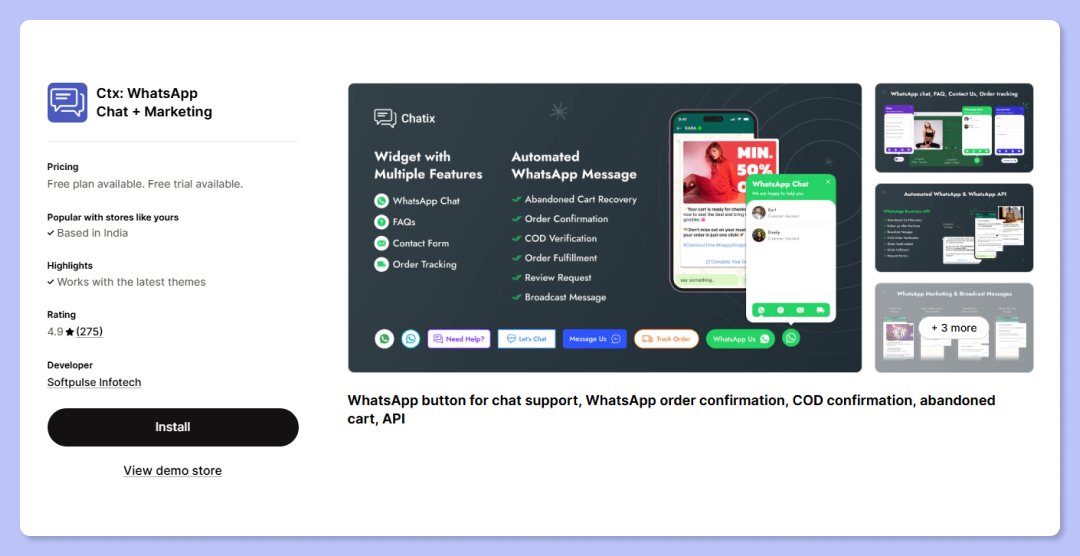
The highest-converting pre-launch move for a Shopify store with an existing customer base is a WhatsApp broadcast to opted-in customers announcing the new product before it goes live. These are people who've already bought from the store — the most likely early adopters, the most likely to leave a first review, and the most likely to share the product in their own networks.
A coming-soon WhatsApp message with a product preview and a launch date generates warm traffic on day one — browsers arriving with prior intent rather than cold traffic discovering the product for the first time. WhatsApp abandoned cart recovery for Shopify is also live from the moment Chatix is installed, so any launch-day cart drops get an automated recovery sequence without any additional configuration.
- WhatsApp broadcast to opted-in customer list before launch day with product preview and launch date
- Automated abandoned cart recovery sequences live from day one — no additional configuration for launch-day drops
- Live chat widget for product queries from launch-day browsers who have questions before purchasing
- Order notification and shipping update automation triggered from Shopify fulfilment events
Honest limitation: Chatix requires an opted-in WhatsApp customer list to be effective for pre-launch broadcasts. For a brand-new Shopify store with no prior customers, the broadcast feature has nothing to send to until the list is built through post-purchase opt-ins.
Pricing: Free plan available. Paid plans from $8.99/month. No markup on Meta conversation fees.
2. Optim — AI-Optimised Product Pages Before Launch
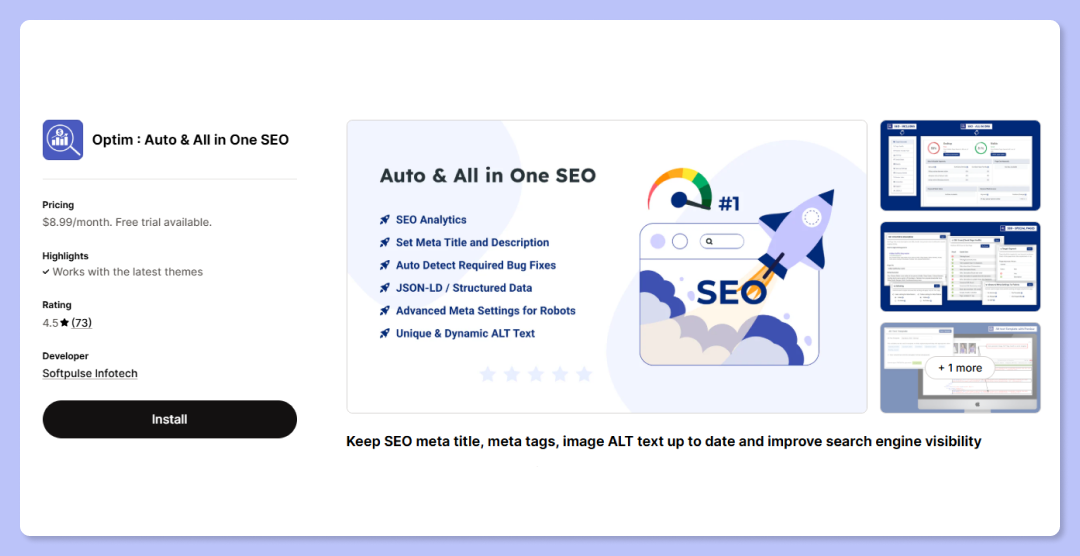
A new product has no organic search ranking, no structured data, and no content optimised for the search queries likely to bring early traffic. Optim's AI-driven product page optimisation addresses this before the product page goes live — meta descriptions, title tags, product descriptions, and schema markup built specifically for the product's likely search intent.
The practical impact for a new product is visibility in Google Shopping and search results from launch day rather than weeks later when organic signals accumulate naturally. A new product page that loads fast, has structured data for rich snippets, and targets the right queries gets indexed and ranked faster than an unoptimised page with no preparation.
- AI-generated meta titles, descriptions, and structured data optimised for new product search intent
- Schema markup for rich snippets — helps new products appear in Google Shopping from launch day
- Product description optimisation for search queries specific to the product category
- Page speed audit to ensure the product page loads within Core Web Vitals thresholds before going live
Honest limitation: Optim's recommendations are starting points — they benefit from human review and brand voice adjustment before publishing. AI-generated copy without editing can feel generic on product pages for distinctive brand voices.
Pricing: Free plan available with limited optimisations. Paid plans scale by product count.
Launch Day Apps: Convert First-Time Buyers on Shopify
Launch day has one specific challenge: converting buyers who have no prior experience with this product and no social proof to reference. Three apps address the three conversion levers that matter most on day one.
1. Loox — Visual Reviews That Build Trust Without Purchase History
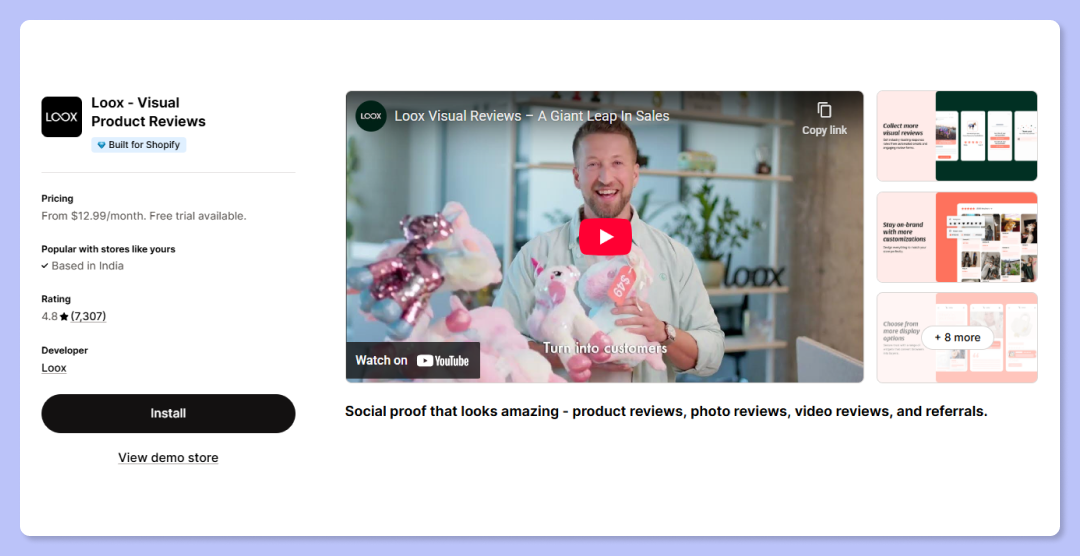
The credibility problem on launch day is specific: zero reviews. Loox's photo review collection starts from the first purchase — the post-purchase review request goes to the first buyer, and the first visual review appears on the product page before the product has reached its second sale. The photo format is particularly effective for new products because it makes the product tangible for browsers who've never seen it in person.
Loox also syndicates reviews to Google Shopping, which improves visibility for new product pages in search results specifically. Combined with Optim's structured data setup, a new product can appear in Google Shopping with star ratings and review counts within days of launch rather than months. For brands where building customer trust on Shopify through social proof is the primary conversion lever, Loox is the most direct path.
- Photo review collection triggered automatically from first purchase — no manual follow-up required
- Google Shopping review syndication — new products appear with star ratings in search results faster
- Review widget embeds on product pages without developer setup — live within minutes of installation
- Incentivised review requests — discount code offered for photo review submission increases collection rate
Honest limitation: The first review takes time — the review request email goes to the first buyer after delivery confirmation. Depending on shipping time, the first Loox review may appear 3-7 days after launch. Product pages are unreviewed until that first review lands.
Pricing: From $9.99/month. Free trial available.
2. Wizio — Upsells and Bundles That Lift AOV at Launch
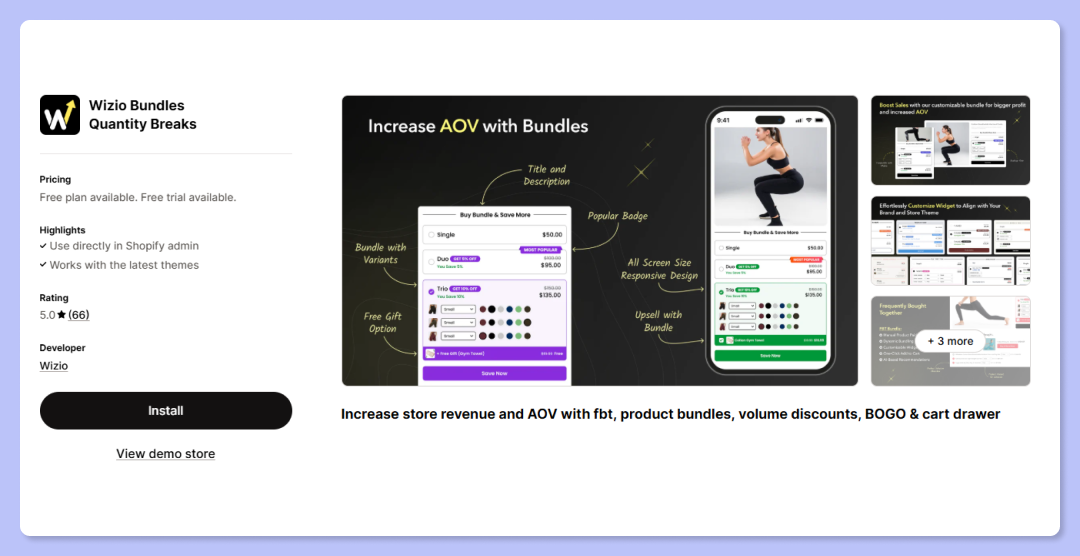
Traditional upsell apps that recommend 'frequently bought together' products have nothing to work with on launch day — the new product has zero purchase history. Wizio's bundle and upsell flows can be manually configured to promote complementary products from the existing catalogue alongside the new product, without requiring purchase data from the new product itself.
This is the specific advantage of Wizio for launch day: the upsell offer is intentionally curated by the merchant rather than generated by an algorithm that doesn't yet have data. A skincare brand launching a new serum can manually pair it with an existing bestselling moisturiser as a bundle — driving AOV from the first launch-day purchase without waiting for purchase patterns to emerge.
- Manually configurable bundle pairings — curate upsells intentionally without relying on algorithmic purchase data
- In-cart upsell offers visible before checkout — highest-converting placement for first-time buyers
- Post-purchase upsell flows for AOV lift after the initial transaction is confirmed
- Discount bundle pricing — configurable flat rate, percentage, or fixed bundle price for launch-day offers
Honest limitation: Wizio's manual configuration requires the merchant to know which complementary products to pair with the new launch. Without a thoughtful pairing strategy, manually configured bundles can feel disconnected from the buyer's intent.
Pricing: Free plan available. Paid plans from $9.99/month.
3. Klaviyo — Email Sequences That Sustain Launch Momentum
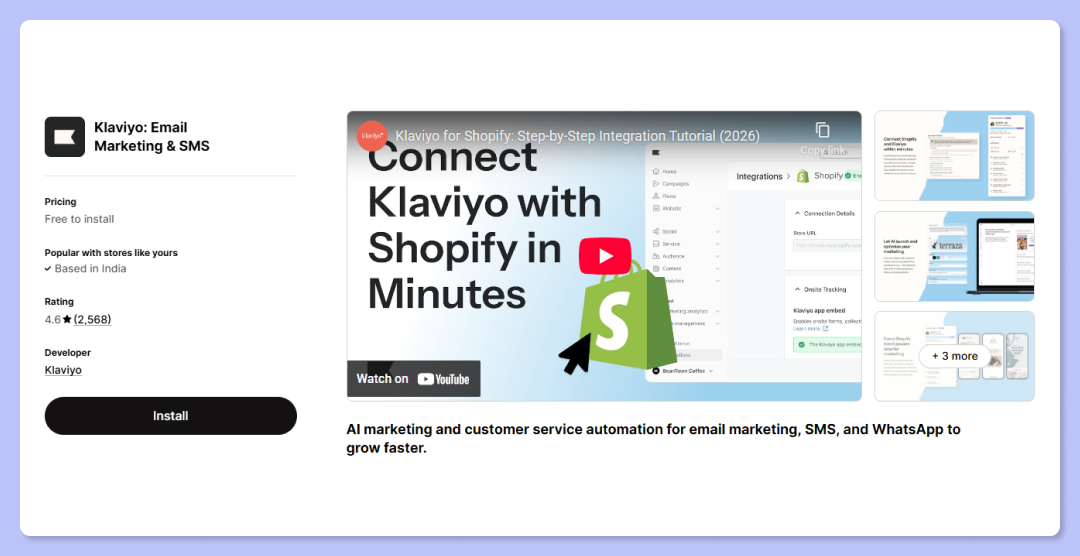
The email sequence for a new product launch has a structure that's different from a standard promotional broadcast. It's a time-based sequence: launch announcement to the subscriber list → launch day purchase confirmation → 48-hour follow-up with early reviews → 7-day post-purchase check-in → 30-day repeat purchase nudge for non-reorderers.
Klaviyo's flow builder handles this sequence without manual sending. The integration with Loox means the 48-hour follow-up can automatically include the first photo reviews collected from launch-day buyers — closing the social proof loop for subscribers who didn't convert on day one. Klaviyo also segments by purchase behaviour, so subscribers who bought from the existing catalogue but haven't yet tried the new product can be targeted specifically.
- Pre-built new product launch flow — announcement, confirmation, review inclusion, repeat purchase nudge
- Loox integration — review widget embeds automatically into post-purchase email sequences
- Segment subscribers who haven't purchased the new product for targeted follow-up campaigns
- Purchase behaviour triggers — separate automations for first-time buyers vs existing customers discovering the new product
Honest limitation: Klaviyo's full feature set has a learning curve for merchants setting up flows for the first time. For stores with no prior email list, Klaviyo's impact at launch is limited — the email channel needs a pre-existing subscriber base to send launch sequences to.
Pricing: Free plan for up to 250 contacts. Paid plans scale with contact list size.
Post-Launch Shopify Apps for Customer Retention and Repeat Sales
The 14-day window after the first purchase is the highest-value retention opportunity a new product will have. Two apps capture that momentum — one for repeat purchase conversion, one for delivery reliability specifically in the Indian market.
1. Rekitr — Subscription Flows for Post-Purchase Retention
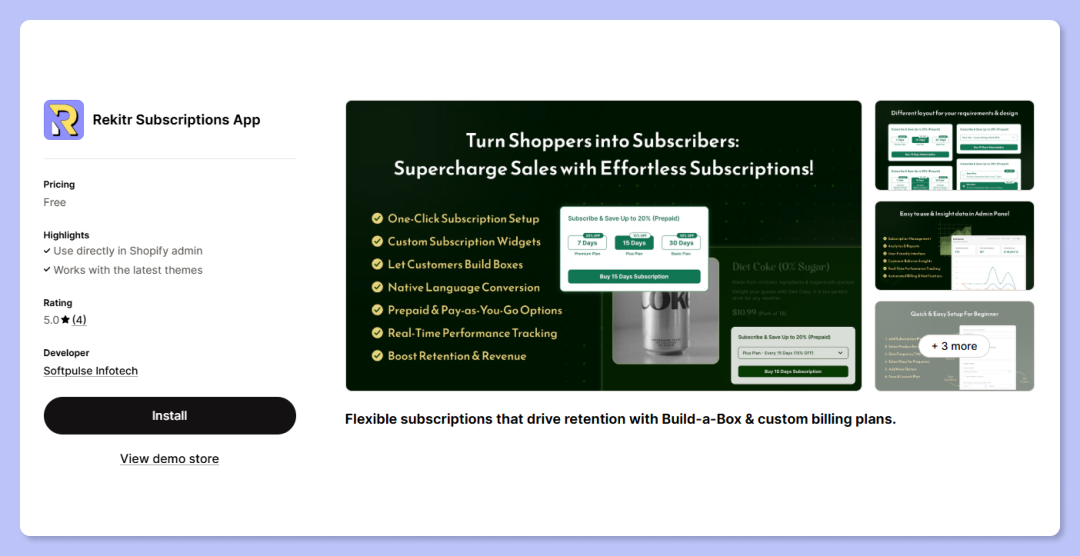
The window for converting a first-time buyer into a subscriber is the first 7-14 days after purchase — while the product is in use and top of mind. Rekitr's subscription flows trigger post-purchase, offering the customer a subscription at a discounted rate timed to when the initial purchase is likely arriving or just being used for the first time.
For consumable or regularly used products — skincare, supplements, food, cleaning products — this converts a one-time launch sale into recurring monthly revenue from the same customer. The timing distinction matters: a subscription offer sent on day 7 post-purchase (when the product is being used) converts at a meaningfully higher rate than one sent on day 30 (when the initial novelty has faded).
- Post-purchase subscription offer triggered at day 3-7 after first purchase — highest conversion window
- Configurable discount for subscription conversion — percentage, flat rate, or free shipping incentive
- Subscription management dashboard for merchants — pause, cancel, and frequency adjustment handled without customer service involvement
- Shopify-native integration — subscription orders processed through the existing Shopify checkout without redirection
Honest limitation: Rekitr subscription flows are most effective for consumable or replenishable products. For one-time purchase products (electronics, furniture, single-use items), the subscription offer won't convert and the post-purchase flow should be repurposed for referral or complementary product cross-sell instead.
For ready-made subscription renewal reminders, payment follow-ups, and re-engagement messages to use alongside Rekitr, the WhatsApp message templates library has a full set built for the post-purchase window.
Pricing: Plans based on subscription order volume. Free trial available.
2. ILS — Reliable Delivery for Indian Shopify Merchants
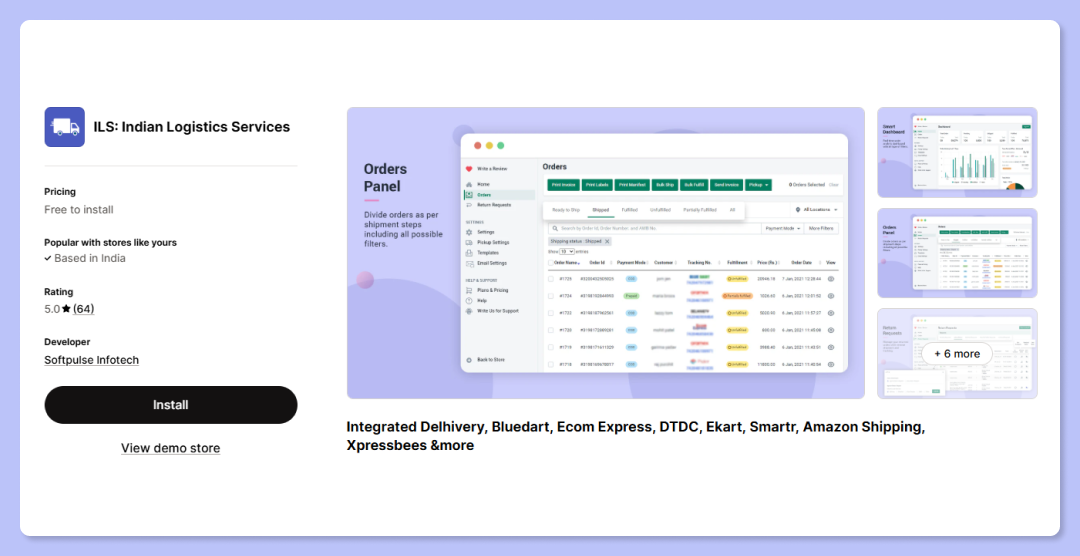
For Indian Shopify stores, delivery reliability is not a post-purchase nicety — it's a determinant of whether a first-time buyer from a new product launch ever buys again. New products in India face higher RTO rates than established products because they lack the brand trust signals that reduce buyer uncertainty. High RTO on a new product launch erodes both unit economics and the first-wave buyer pool that drives reviews and referrals.
ILS reduces RTO through address verification at checkout, WhatsApp delivery confirmation messages that reduce failed delivery attempts, and NDR (non-delivery report) management that proactively recovers deliveries before they're marked as failed. For a new product where every first-time buyer is a potential long-term customer, protecting the delivery experience directly protects the repeat purchase rate.
- Address verification at checkout — catches incorrect addresses before dispatch, reducing preventable RTO
- WhatsApp delivery confirmation messages — reduces failed delivery attempts by keeping buyers informed
- NDR management — proactive recovery of delivery exceptions before failed delivery is recorded
- COD order verification — reduces fraudulent or casual COD orders for new products with no purchase history
Honest limitation: ILS is specifically built for Indian logistics infrastructure. It works with Indian courier partners and addresses India-specific delivery challenges — it is not relevant for Shopify stores shipping to other markets.
Pricing: Pricing on request based on order volume.
Ready-made shipping message templates cover every delivery stage — dispatch confirmation, out-for-delivery, and delivered notifications — pre-built for WhatsApp and ready to send through Chatix.
Your Complete New Product Launch Stack on Shopify
The 7 apps above work as one integrated launch sequence — not seven separate tools running independently. Here's how the stack connects phase by phase
| Phase | Apps | Job to be done |
|---|---|---|
| Pre-launch | Chatix + Optim | Build warm WhatsApp audience. Get product page technically ready for search from day one. |
| Launch day | Loox + Wizio + Klaviyo | Capture social proof from first buyers. Lift AOV with manual bundles. Fire launch email sequence automatically. |
| Post-launch (Days 1-14) | Rekitr + ILS | Convert first buyers to subscribers in peak retention window. Protect delivery experience to protect repeat purchase rate. |
The sequence matters more than any individual app. Chatix broadcasts bring the first audience with intent. Optim ensures the page converts them. Loox captures proof from the first buyers before the second wave arrives. Wizio lifts AOV from launch-day transactions. Klaviyo sustains the relationship through the first 30 days with automated sequences. Rekitr converts one-time buyers into subscribers while they're most receptive. ILS ensures the physical delivery experience doesn't undo everything the digital experience built — particularly important in Indian markets.
Which Shopify App to Install First for a New Product Launch
The answer depends on where you are in the launch timeline.
- 30+ days before launch: Optim first — get the product page technically ready for search. Then Chatix — start building WhatsApp opt-ins from existing customers and website visitors before the product is live
- 7-14 days before launch: Install Wizio and Loox — both need to be live before the first purchase arrives. Configure Wizio's manual bundle pairings deliberately, not at the last minute
- Launch day: Activate Klaviyo's launch announcement sequence — pre-build the flow so it fires automatically from the first purchase trigger without manual sending
- Days 1-7 post-launch: Activate Rekitr subscription flow — time the offer to days 5-7 after first delivery, not at purchase. ILS should be live from day one for Indian merchants
- Days 7-30: Monitor Loox review collection and Klaviyo sequence performance. The 48-hour follow-up email with early reviews is the highest-converting email in the launch sequence — if reviews aren't collecting, the sequence underperforms
One thing to avoid: installing all 7 apps on launch day simultaneously. Each app benefits from deliberate configuration before first use. Pre-launch apps installed on launch day have nothing to work with. Retention apps installed on launch day miss the peak window.
Use Case: New Product Launch on Shopify With Phase-Based App Stack
Problem
A Shopify skincare brand in Mumbai with ₹18L/month existing revenue was launching a new face serum. They had Klaviyo and Loox already installed. Their previous new product launch 8 months earlier generated only 23 sales in the first 30 days despite running Meta ads — the product page had zero reviews on launch day, no WhatsApp announcement went out, and no subscription offer was made to first buyers.
Action
For this launch, the founder installed Chatix three weeks before launch day and sent a coming-soon WhatsApp broadcast to 3,200 opted-in customers with a product preview and launch date. Optim was used to optimise the product page meta and structured data before the page went live. Rekitr was configured with a day-5 post-purchase subscription offer at 15% off for monthly subscribers.
Result
In the first 30 days, the serum generated 187 sales — compared to 23 from the previous launch. The WhatsApp broadcast on launch morning had a 94% open rate and directly attributed 47 first-day orders from the opted-in list. Loox collected 31 photo reviews in 30 days versus 4 from the previous launch — because the first buyers arrived with purchase intent and were primed to engage post-purchase. 23 customers converted to a monthly subscription via Rekitr by day 30, adding ₹3.1L in projected annual recurring revenue from the launch cohort alone.
Final Thoughts
New Shopify products underperform when the app stack treats them the same as established ones. The phase-based approach in this guide — pre-launch awareness, launch day conversion, post-launch retention — changes the outcome because it matches the app's function to what the product actually needs at each stage of its commercial life.
The 30-day window after a new product launch is the most valuable the product will have. The first buyers are the most motivated to review, the most open to subscribing, and the most likely to refer. A generic app stack misses that window. A phase-based stack captures it.
For Shopify merchants ready to run this stack on their next product launch, start with pre-launch WhatsApp opt-in building through Chatix — the broadcast audience you build before launch day is the single highest-converting asset on launch morning. Install Chatix from the Shopify App Store. For seasonal launches specifically, the guide on Shopify apps for BFCM sales covers how to adapt this stack for high-traffic promotional events.
Frequently Asked Questions
1. What are the best Shopify apps for a new product launch?
For a new product launch specifically, the most effective stack is phase-based: Chatix for pre-launch WhatsApp announcements, Optim for product page optimisation before going live, Loox for social proof collection from first buyers, Wizio for launch-day upsells, Klaviyo for post-purchase email sequences, and Rekitr for subscription conversion in the first 14 days. The sequence matters — pre-launch apps installed on launch day have nothing to work with.
2. Which Shopify app is best for customer retention after a new product launch?
Rekitr's subscription flows are the most direct retention tool for new products — they convert first-time buyers into subscribers in the 7-14 day post-purchase window when the product experience is still fresh. Klaviyo's post-purchase email sequences sustain the relationship beyond that window. For Indian stores, ILS improves delivery reliability which directly affects whether first buyers come back for a second order.
3. How do I increase sales of a new product on Shopify in the first 30 days?
The most effective lever in the first 30 days is a warm pre-launch audience combined with social proof collected from the first buyers. A WhatsApp broadcast to opted-in customers before launch generates first-day sales from people with prior purchase intent. Loox photo reviews from those first buyers then convert the second wave of browsers who arrive cold. Without both, new products rely entirely on paid traffic converting without social proof — which underperforms.
4. What Shopify apps work best for Indian merchants launching new products?
Indian merchants specifically benefit from ILS for RTO reduction on new products, which lack the brand trust that reduces failed deliveries on established products. Chatix's WhatsApp automation handles COD verification and delivery confirmations natively for Indian logistics. The combination of ILS for delivery reliability and Chatix for WhatsApp-based customer communication addresses the specific challenges of high-COD, high-RTO Indian ecommerce that general Shopify apps don't account for.
5. Do I need different apps for a new product vs an established product on Shopify?
Yes. An established product has purchase history for upsell algorithms, existing reviews for social proof, and a subscriber base trained to respond to promotional emails. A new product has none of these. Pre-launch awareness apps and manually configured upsell bundles are necessary at launch specifically because algorithmic tools have no data to work with. The app stack for a new product is sequenced differently from the stack for a mature product.
6. When should I install a subscription app like Rekitr for a new Shopify product?
Install Rekitr before launch day so it's ready to trigger from the first purchase confirmation. Configure the subscription offer to fire at days 5-7 post-purchase — not at the point of purchase (too early, before the customer has experienced the product) and not at day 30 (too late, after the initial novelty has faded). For non-consumable products where subscriptions don't apply, Rekitr's post-purchase flow can be repurposed for referral incentives or complementary product cross-sells from the existing catalogue.