


How WhatsApp Chat Works on a Website — The Complete Explainer
How-to Guides Published: March 17, 2025
You've seen the WhatsApp button on websites before — that familiar green icon sitting in the corner of a page, inviting you to start a conversation. But if you're a business owner thinking about adding it to your own site, the question isn't whether to add it. It's whether you actually understand how the whole thing works before you do.
Most guides skip straight to setup. This one doesn't. This post explains exactly what happens when a visitor clicks that button, how the conversation flows, what the business side looks like in real time, and how WhatsApp chat behaves differently from every other chat tool you may have used before. Once you understand it fully, deciding what to do next becomes much easier.
Quick Answer
When a visitor clicks a WhatsApp chat button on a website, they are redirected to WhatsApp — either the app on their phone or WhatsApp Web on desktop — where a chat with your business number opens automatically. The conversation then happens entirely inside WhatsApp, not on your website. Your team receives and replies to messages from their WhatsApp Business inbox, and the conversation continues even after the visitor leaves your site.
Key Takeaways
- WhatsApp chat on a website is not a traditional live chat widget — conversations happen inside WhatsApp, not in a browser window
- The visitor's experience differs depending on whether they're on mobile or desktop
- Conversations persist after the visitor leaves your site — WhatsApp keeps the thread open
- The business side requires a WhatsApp Business number to receive and manage incoming messages
- WhatsApp chat and traditional live chat serve different purposes and work in fundamentally different ways
What Actually Happens When a Visitor Clicks the WhatsApp Button?
This is the question most guides never answer clearly — so here is the exact sequence of what happens, step by step.
1. The visitor's side
A WhatsApp chat button on a website is built around a click-to-chat link — a special WhatsApp URL that includes your business phone number and optionally a pre-filled message. When a visitor clicks it, one of two things happens depending on their device:
- On mobile with WhatsApp installed — WhatsApp opens immediately on their phone with a chat window addressed to your business number. A pre-filled message may appear in the text box. The visitor taps send or types their own message.
- On desktop — If WhatsApp Desktop is installed, it opens directly. If not, they land on WhatsApp Web and scan a QR code to connect their phone — then the chat opens.
In both cases the visitor is now inside WhatsApp — not on your website anymore. If you're ready to set one up after reading this, the step-by-step guide on how to add a WhatsApp live chat button to your Shopify store covers the full installation — no coding needed.
2. What happens to the conversation?
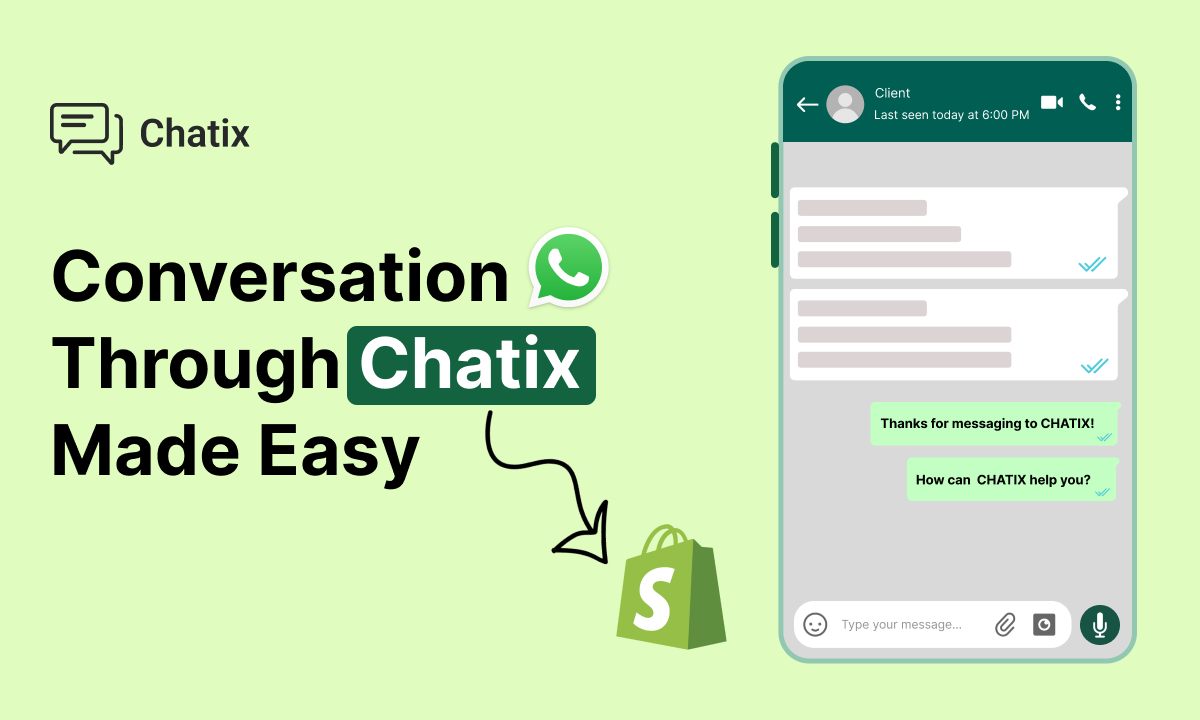
The message lands in your WhatsApp Business inbox — either the WhatsApp Business App on your phone or a shared team inbox if you're using a tool connected to the WhatsApp Business API. From that point it behaves exactly like any other WhatsApp conversation — your team can reply with text, images, voice notes, documents, or links. The visitor receives replies directly in their WhatsApp, the same app they use every day.
3. The key thing most people miss
Once the conversation starts in WhatsApp, it lives there permanently. Even if the visitor closes your website, the chat thread remains open in their WhatsApp. You can follow up later, send an update, or continue the conversation days after their original visit. This is fundamentally different from a traditional live chat widget where the conversation disappears when the browser tab closes.
How WhatsApp Chat Works on Mobile vs Desktop? — Key Differences
The experience is not identical across devices — and understanding the difference matters for how visitors interact with your chat button.
1. On mobile
This is where WhatsApp chat works most seamlessly. One tap on the chat button opens WhatsApp instantly — no friction, no loading, no QR code. The pre-filled message appears if you set one up and the visitor sends it in seconds. Mobile is also where WhatsApp has its biggest advantage over traditional live chat — most live chat widgets on mobile are notoriously difficult to use, with small text boxes and sessions that time out. WhatsApp on mobile is familiar and comfortable because it's the app visitors already use every day.
2. On Desktop
If the visitor has WhatsApp Desktop installed, the flow is smooth. If not, they land on WhatsApp Web and need to scan a QR code with their phone to connect. For first-time WhatsApp Web users this adds friction — and some visitors may abandon the flow at that step. Desktop conversion rates on WhatsApp chat buttons are typically slightly lower than mobile as a result.
Practical tip - If you have a significant desktop audience, add a brief label near your chat button — 'Opens in WhatsApp' — so visitors know what to expect before they click. Small detail, meaningful difference in drop-off rates.
What the Business Side Looks Like? Where Conversations Land and How They're Managed
Understanding what the visitor experiences is only half the picture. Here's what happens on your side when someone sends a message through your WhatsApp chat button.
1. Where messages land?
Every message sent through your WhatsApp chat button arrives in your WhatsApp Business inbox. If you're using the WhatsApp Business App, this is a standard inbox on your phone with business-specific features like quick replies, labels, and away messages for business. If you're connected to the WhatsApp Business API through a third-party tool, messages land in a shared team inbox that multiple agents can access simultaneously.
For Shopify stores with a team handling customer queries, Chatix provides this shared inbox natively — multiple agents can manage conversations from the same business number without duplicating replies or missing messages.
2. How response works?
You reply directly from WhatsApp Business — typing a response, sending a product image, sharing a link, or using a saved quick reply template. The visitor receives your reply in their personal WhatsApp instantly. There's no separate dashboard to log into, no ticket system, no notification email. It's a direct conversation happening in real time inside WhatsApp.
3. What happens when nobody is available?
If your team isn't online, the message sits in your inbox waiting. You can set up an away message in WhatsApp Business that automatically replies when someone messages outside your business hours — letting the customer know when to expect a response. This prevents the experience of a message disappearing into silence with no acknowledgement.
4. The 24-hour conversation window
Once a customer messages you, a 24-hour message window opens during which you can reply freely. After 24 hours of no new message from the customer, you can only send pre-approved template messages to restart the conversation. This is a WhatsApp policy — not a limitation of any particular tool — and it's worth knowing before you start using WhatsApp chat as a business communication channel.
How WhatsApp Chat Fits Into the Customer Journey on a Website?
WhatsApp chat doesn't replace your website — it fills the gaps that your website can't cover on its own.
1. Before a purchase — answering questions that remove hesitation
Most visitors who abandon a website without buying don't leave because they aren't interested. They leave because they have an unanswered question — about delivery times, return policies, product sizing, or stock availability. A WhatsApp chat button gives them a direct, instant way to get that answer without filling out a contact form and waiting hours for an email reply. A question answered in two minutes keeps the visitor engaged. The same question answered the next morning means the sale is already gone.
The 7 Tips for Using WhatsApp for Customer Support guide covers how to handle response times, team workflows, and the 24-hour window practically for Shopify stores.
2. During a purchase — reducing friction at the critical moment
Visitors on a checkout or cart page are the highest-intent visitors on your site. If something stops them — a question about payment, a concern about delivery, confusion about a discount code — WhatsApp chat gives them an immediate lifeline. A single reply at the right moment can recover a sale that would otherwise be lost.
Understanding the difference between cart abandonment and checkout abandonment helps you decide exactly where on your store the WhatsApp chat button does the most work.
3. After a purchase — building trust and reducing support load
Post-purchase is where WhatsApp chat quietly does some of its best work. Customers who can message your business directly after buying and receive fast, personal responses become repeat customers. They also raise fewer support tickets because their questions get answered before they escalate into complaints.

What Makes WhatsApp Chat Different From a Traditional Live Chat Widget?
If you've used a traditional live chat tool before — Intercom, Tidio, Zendesk Chat — WhatsApp chat works very differently. Understanding the distinction helps you set the right expectations.
1. Traditional live chat stays on your website. WhatsApp doesn't
With a traditional live chat widget, the entire conversation happens in a browser window on your site. The moment the visitor closes the tab, the conversation ends — there's no way to continue it unless they come back and start again. WhatsApp keeps the conversation alive permanently in the visitor's own app, independent of whether they're on your website or not.
2. Traditional live chat is anonymous. WhatsApp is not
A visitor using a traditional live chat widget is typically anonymous unless they provide their name. With WhatsApp, the visitor's phone number is attached to the conversation from the first message. This means you have a direct, persistent contact for every customer who ever messages you — something traditional live chat cannot provide.
3. Where traditional live chat still has an edge
For complex, multi-step support that needs structured workflows — ticketing, escalation, full CRM history — traditional live chat tools are more sophisticated. WhatsApp is better for direct, personal, fast communication. The two tools serve different conversation types, and knowing which your customers primarily need will help you decide whether WhatsApp chat alone is enough or whether both have a place on your site.
If you're at the stage of evaluating tools, this guide on the best WhatsApp live chat tool for your Shopify store covers exactly what to look for and what questions to ask before committing.
Final Thoughts
WhatsApp chat on a website is simpler than it looks from the outside — but it works very differently from traditional live chat tools, and understanding those differences before you set anything up makes everything easier.
Conversations happen inside WhatsApp, not on your site. They persist after the visitor leaves. The business side requires a WhatsApp Business number and ideally a proper inbox to manage conversations at scale. And the mobile experience is where WhatsApp genuinely outperforms every other chat option available.
If you're ready to move from understanding how it works to actually adding it to your website or Shopify store, the WhatsApp Integration with Website guide covers the full setup — which method to choose, how to configure it for Shopify, and how to connect it to. Chatix so everything runs automatically from day one.
Frequently Asked Questions
1. Does WhatsApp chat on a website work without the WhatsApp Business App?
Ans: Technically a basic click-to-chat link will work with a personal WhatsApp number — but it is not recommended for business use. The WhatsApp Business App provides essential features like quick replies, away messages, and business profiles that make managing customer conversations workable. Using a personal number creates confusion and becomes unmanageable as message volume grows.
2. How does WhatsApp chat work on a website?
Ans: When a visitor clicks the chat button, WhatsApp opens and starts a conversation with your business number.
3. Can multiple team members receive and reply to WhatsApp messages from a website chat button?
Ans: Not with the standard WhatsApp Business App — that is limited to one device. For multiple agents to manage conversations simultaneously, you need a tool connected to the WhatsApp Business API that provides a shared team inbox. This allows several team members to handle incoming messages from the same business number without duplicating replies or missing messages.
4. How can I add a WhatsApp chat button easily?
Ans: With Chatix, it’s simple—generate a link and embed it, or use our Shopify app for a floating widget or share button.
5. Is WhatsApp chat free for websites?
Ans: Basic WhatsApp chat is free. Advanced features may require third-party apps.
6. What happens to the WhatsApp chat conversation if the visitor leaves my website?
Ans: The conversation continues in WhatsApp on both sides. The visitor still has the chat thread in their WhatsApp app and can message again at any time. You still have the thread in your WhatsApp Business inbox and can follow up. Unlike a live chat widget, the conversation is not tied to a browser session and does not disappear when the visitor closes your site.
7. Does WhatsApp chat on a website work on all devices?
Ans: Yes — but the experience differs slightly. On mobile with WhatsApp installed, clicking the button opens WhatsApp immediately with no friction. On desktop, it opens WhatsApp Desktop if installed, or redirects to WhatsApp Web which requires a QR code scan for first-time users. Mobile provides the most seamless experience.
8. Is there a cost to adding WhatsApp chat to a website?
Ans: A basic click-to-chat button can be added for free using WhatsApp's own link format. For features like shared team inboxes, automation, broadcast messaging, and Shopify integration, a third-party tool connected to the WhatsApp Business API is needed — these typically have a monthly cost depending on the plan and message volume.